A plant can calculate OEE perfectly and still learn very little. The useful question is not only what the percentage was. It is why the loss occurred, whether the standard was valid, and what operational action should follow.
Start with the production standard
Performance loss is meaningful only when the ideal cycle is tied to the correct product, operation and routing standard. A static target across mixed products can make the metric misleading even when the mathematics is correct.
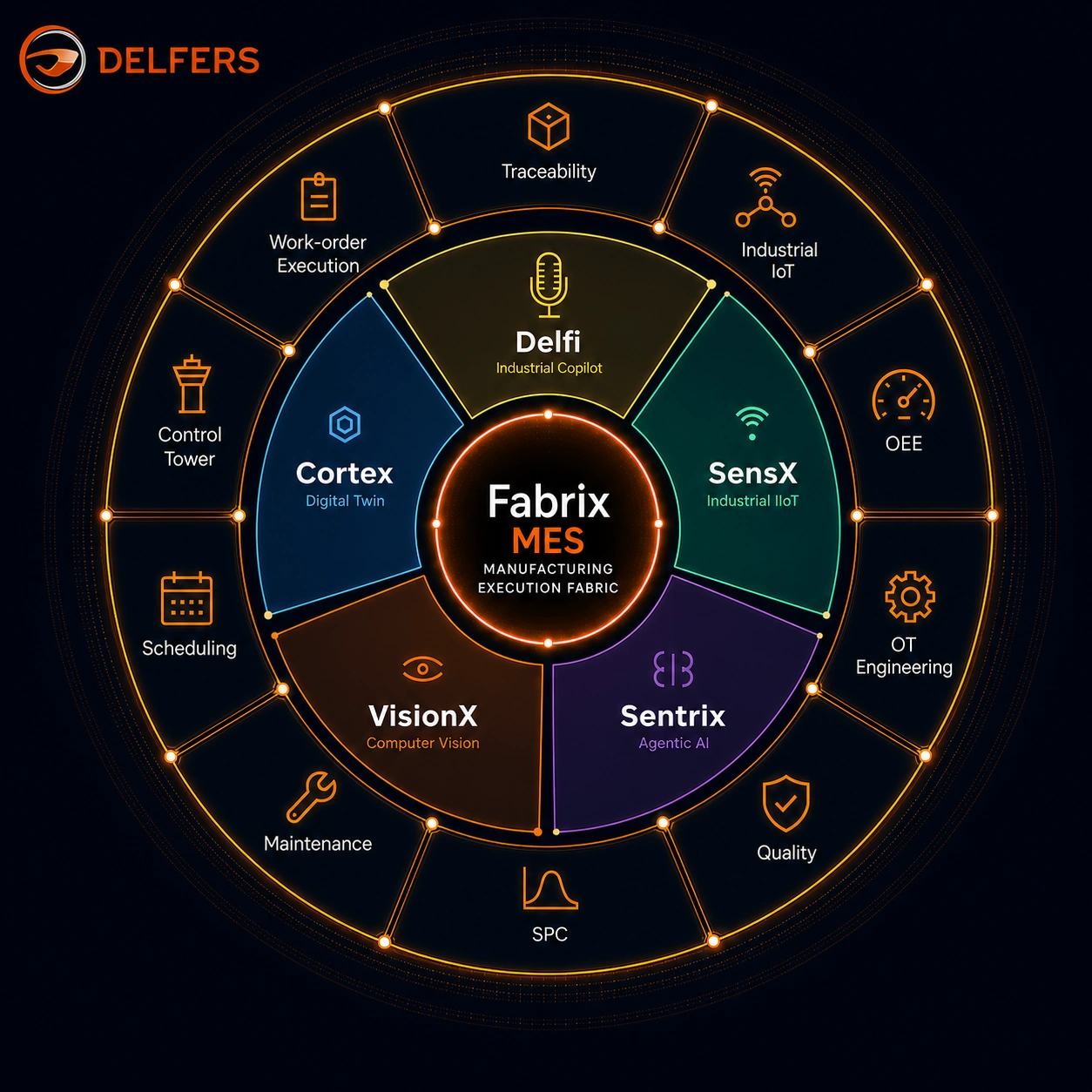
Fabrix associates execution with routing standards so the OEE calculation can use the production context active at that moment. Cortex can place that result alongside asset state and process context for deeper analysis.
Make downtime a managed event
Availability loss should not end as an anonymous gap between two timestamps. The plant needs a reason hierarchy that operators can use quickly, supervisors can refine, and reliability teams can analyze consistently.
Machine state can propose the event, the operator can confirm or correct it, and longer events can trigger escalation or maintenance workflow based on defined rules.
Separate signal quality from process performance
A missing count, stale tag or network interruption should not be interpreted as poor production performance. The execution layer needs a clear data-quality state so incomplete evidence is visible.
A trustworthy system distinguishes known loss from unknown data instead of filling the gap with a precise-looking but unsupported number.
- Availability loss by owned reason
- Performance loss against the correct routing standard
- Quality loss tied to actual disposition
- Data-quality state for every calculated interval
Use Pareto to choose the next question
OEE is most useful as an entry point into loss analysis. A downtime Pareto can expose recurring constraints while product and shift segmentation can reveal whether an issue is systemic or contextual.
The objective is not to maximize a dashboard score. It is to make the dominant loss visible enough that an operating team can decide what to investigate next.
Standards and primary sources used for context.
These links provide technical context. Their inclusion does not claim product certification or compliance unless explicitly stated elsewhere.