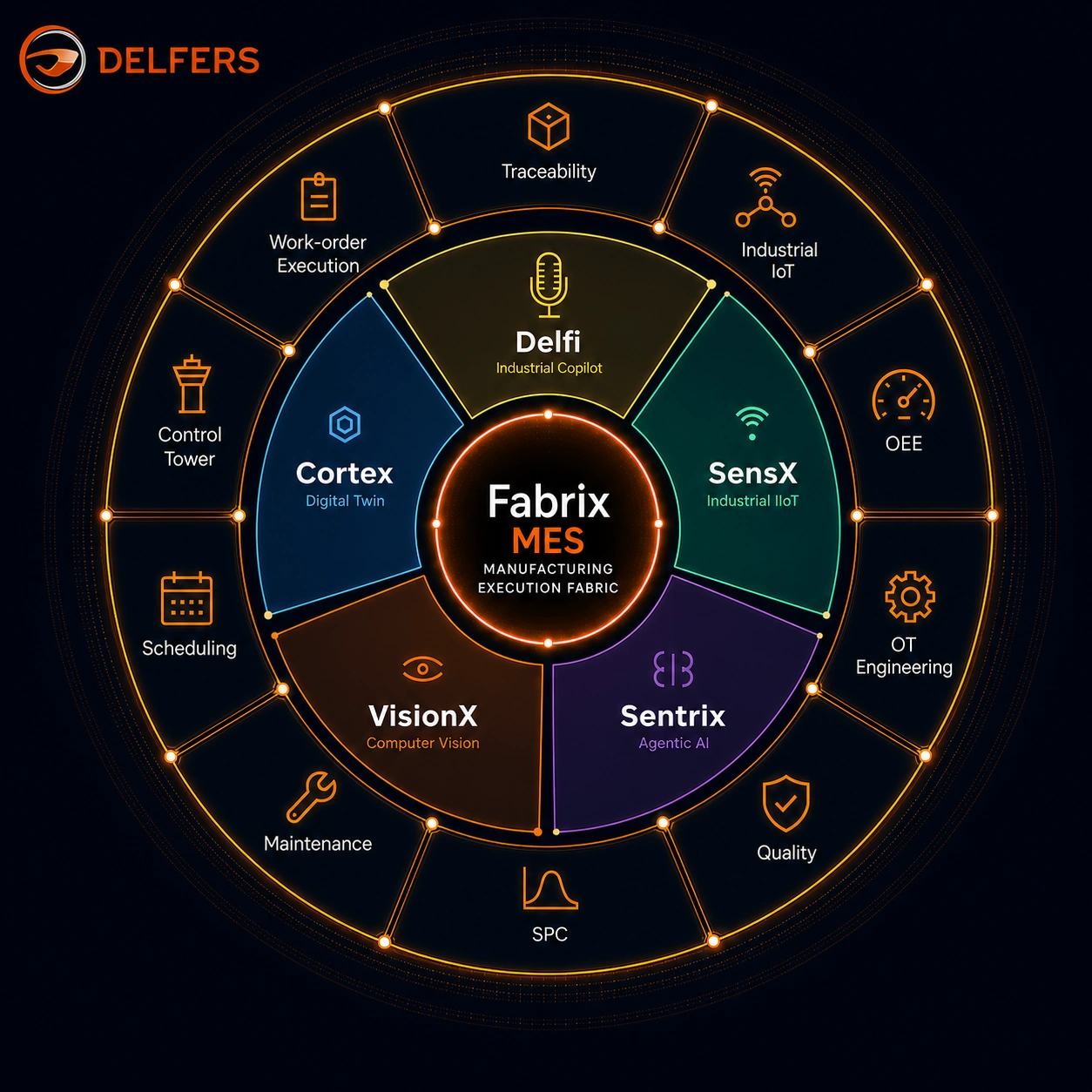
SPC and computer vision answer different quality questions. SPC asks whether a measured process is stable and capable. Vision asks whether the produced part or observed condition matches a defined visual requirement. A connected quality architecture keeps those signals separate but links them to the same unit, operation and production context.
SPC sees drift before a specification failure
A process can still be inside specification while its distribution is moving in the wrong direction. Control charts and rule detection help teams distinguish common-cause variation from patterns that deserve investigation.
Fabrix supports control charts, capability metrics and Western Electric rule detection so the quality conversation can move from isolated measurements to process behavior over time.
Vision sees what conventional measurements can miss
Surface defects, assembly presence, label content, orientation and workmanship often require visual evidence. VisionX adds camera engineering, edge inference and evidence capture to those use cases.
The model output should be tied to the serial number, work order, operation, model version and image evidence used for the decision.
Connect the evidence through MES
When an SPC rule or visual defect is detected, the execution system should know which unit and operation are affected. That allows a defined hold, non-conformance or review workflow to begin without a separate reconciliation step.
The same link helps investigation by bringing process measurements, visual evidence, material genealogy and equipment context into one production record.
- Unit and work-order identity
- Measurement and control-chart state
- Vision result and retained evidence
- Defect classification and severity
- Hold, review and disposition
Do not collapse uncertainty into pass-fail
A missing gauge reading, poor camera image or out-of-control measurement system should be represented explicitly. Both statistics and AI can produce conditions that are not confidently evaluable.
A governed quality workflow keeps pass, fail and unable-to-evaluate distinct, then routes each state to the correct operational action.
Standards and primary sources used for context.
These links provide technical context. Their inclusion does not claim product certification or compliance unless explicitly stated elsewhere.